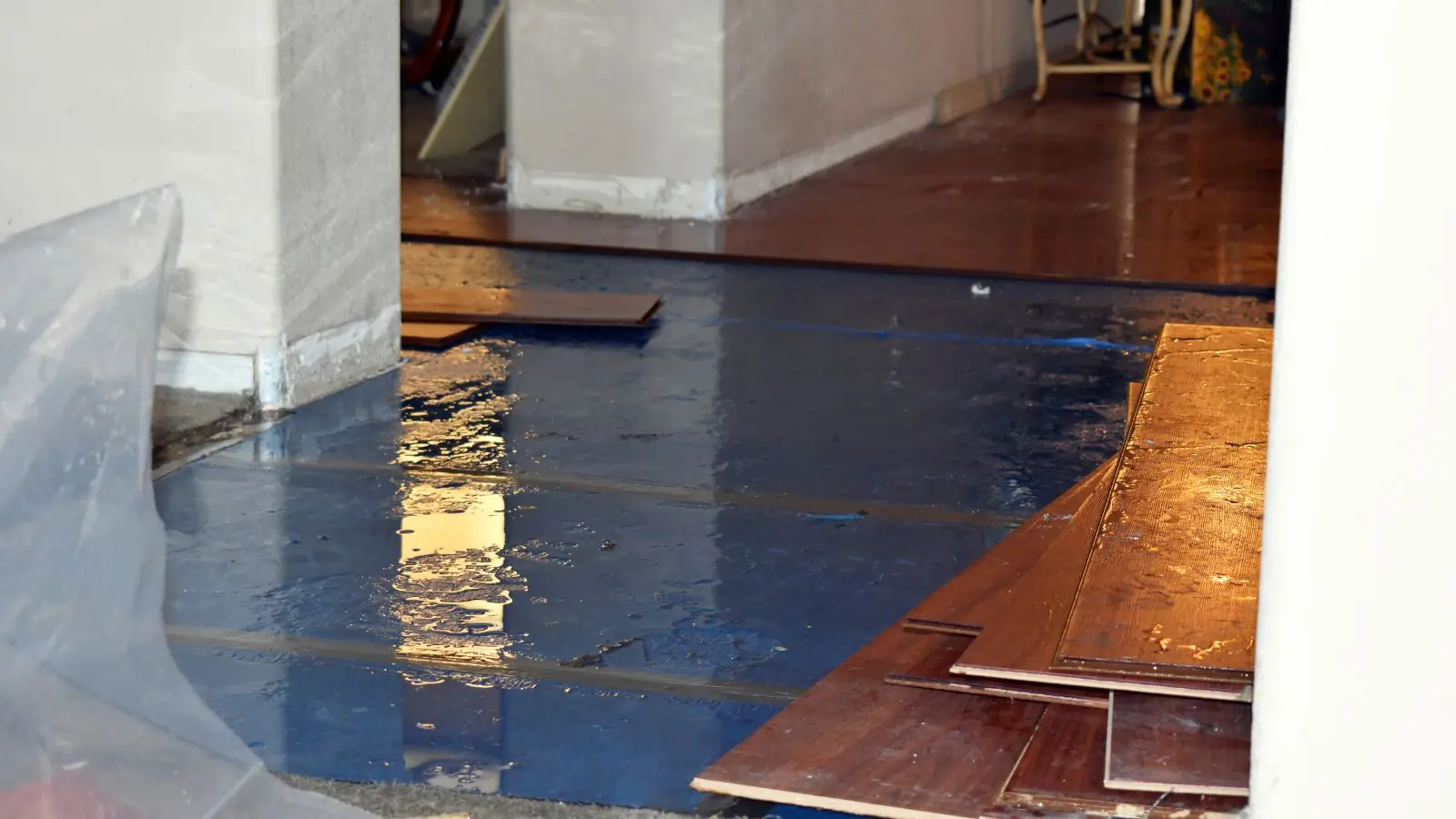
What Water Does to a Wood Floor
Wood is a natural sponge. When water reaches a floor, the boards pull it up through the cut ends and the seams, and they swell. A board that was flat last week can lift at the edges within a day or two, and the finish can turn cloudy or white where moisture is trapped underneath it.
The speed of the response matters more than the size of the spill. According to the U.S. Environmental Protection Agency, water-damaged materials should be dried within 24 to 48 hours to limit mold growth. Hardwood usually needs that same window, because the longer boards stay wet, the more they move.
Most Beverly Hills homes with wood floors have one of three types. Solid hardwood is cut from a single piece and can often be sanded more than once. Engineered wood has a real-wood face over layered plywood. Floating floors click together over a pad. Each reacts differently, which is why the type should be identified before any plan is made.
The First 48 Hours
Stop the source
Close the shutoff at the fixture, appliance or main. A floor cannot dry while water is still arriving.
Remove standing water
Mop, squeegee or extract. Do not push water toward the walls, where it can reach the baseboards and the wall cavity.
Lift what sits on the floor
Move rugs, planters, furniture legs and boxes. Wet rugs trap moisture against the finish and can stain the wood.
Move air, not heat
Run fans and a dehumidifier if you have one. Skip heaters and direct heat, which can dry the top too fast and split the boards.
Photograph before you pull anything
Take photos and video of the floor, the source and the surrounding walls, so the damage is documented.
Cupping, Crowning, Buckling and Staining
These four words describe what the floor is telling you. Each one points to a different amount of moisture, and each leads to a different repair decision.
| Sign | What it usually means | Typical next step |
|---|---|---|
| Cupping, edges higher than the center | Moisture came from below or the boards absorbed more on the underside | Dry fully, then reassess before any sanding |
| Crowning, center higher than the edges | Often follows cupping when a floor was sanded before it was dry | Allow more drying time, then level |
| Buckling, boards lifting off the subfloor | Heavy saturation, boards expanded with nowhere to go | Usually partial or full replacement |
| Dark stains or black marks | Water reached the wood or the finish for an extended time | Sanding may remove them, deeper stains may not |
| White haze under the finish | Moisture trapped in the coating | Often clears as the floor dries |
Solid, Engineered and Floating Floors Behave Differently
Solid hardwood has the best chance of being dried in place, because it is one piece of wood and can be refinished afterward. It also swells the most, so moisture readings need to come down to a stable level before anyone judges the result.
Engineered wood is thinner on top, so repeated sanding is limited. Its layered core can delaminate when soaked. Floating floors can often be lifted in sections to dry the pad and subfloor underneath, and the planks themselves are sometimes reused if they have not swollen.
Dry First, Then Decide
The common mistake is to refinish or replace a floor while it is still wet. A floor that looks dry on top can still hold moisture in the boards and the subfloor. Once it is sealed or covered, that moisture has nowhere to go, and cupping, stains or mold can follow.
Moisture meters and drying logs show when a floor has actually reached a safe level. We take readings in the floor, the subfloor and the wall base, and repeat them until the numbers stop changing. Only then is it fair to talk about refinishing, patching or replacement.
When to stop DIY and call a crew
- Water came from a toilet, sewer line, washing machine drain or outside flooding
- The floor is buckling or lifting off the subfloor
- The wet area is larger than a room or runs under cabinets or walls
- The water has been there longer than two days
- You see dark staining or smell something musty
Wet hardwood floor in Beverly Hills?
Call the 24/7 line. A crew can be sent the same day when available.
Refinish, Patch or Replace
A floor that cupped slightly and then flattened after drying is often a refinishing job. A floor with a few damaged boards can be patched if matching boards are available, which is harder in older homes where the species and the finish have aged. A buckled floor or a floor over a wet subfloor is usually replaced in the affected area.
Replacing only part of a floor can leave a visible line where new boards meet old. Ask the contractor how the transition will be handled, and ask whether the adjoining room should be refinished at the same time so the finish looks even.
Hidden Water Under the Boards
Water often travels under a wood floor before it shows on top. The subfloor, the pad under a floating floor and the joists below can all hold moisture while the surface looks normal. That is why a floor can seem fine on day one and start to cup on day five.
Moisture meters can read through hardwood to check the boards, and thermal cameras can show cool, wet areas below the surface. Where water is trapped, a crew may remove a few boards or drill small holes to push air underneath.
Questions to Ask a Floor Contractor
- What moisture level will you wait for before sanding or sealing?
- How will new boards be blended with the existing floor?
- Is the subfloor being checked, and who is responsible if it is damaged?
- Will the finish be matched, or is the whole floor being refinished?
- What happens if the floor cups again after the repair?
The answers tell you whether the contractor understands drying. A contractor who plans to start sanding the week after the loss, without readings, may be setting the floor up to move again.
Flooring Rules in Beverly Hills Condos
Many Beverly Hills condominiums and co-ops, including buildings along the Wilshire corridor, have their own flooring rules. Associations often require written notice before work, approved underlayment and sound-rating standards for hard flooring.
Before you pull up a wet floor in a unit, read your governing documents and tell building management in writing. If the water came from the unit above or a shared riser, the association may need to be involved in the claim as well.
Source type: Association governing documents and building management rules
Insurance and Documentation
Whether your floor is covered depends on the cause, since policies often split sudden losses from slow leaks and neglect. According to the California Department of Insurance, standard homeowners policies usually exclude flood damage. Read your policy or ask your insurer how your floors are treated.
Photos, moisture readings and written notes help whatever the outcome. Keep receipts for any emergency work and for items you move or discard.
Wood floor questions
Often, yes, if it is dried quickly and has not buckled. Solid hardwood has the best odds. Engineered floors are more limited, and floors over a wet subfloor may need partial replacement.
It depends on how much water reached the boards and the subfloor. Drying is measured with moisture readings, not the calendar, and often takes several days before a floor is stable.
Often. Many Beverly Hills buildings require written notice and approved materials for flooring work. Check your governing documents and tell management early, since the water source may also involve the association.
If water is still on the floor, start with emergency water removal and then water mitigation for drying. After drying, water damage repair covers the rebuild. We also serve West Hollywood, and the full list of cities is on the service area page.