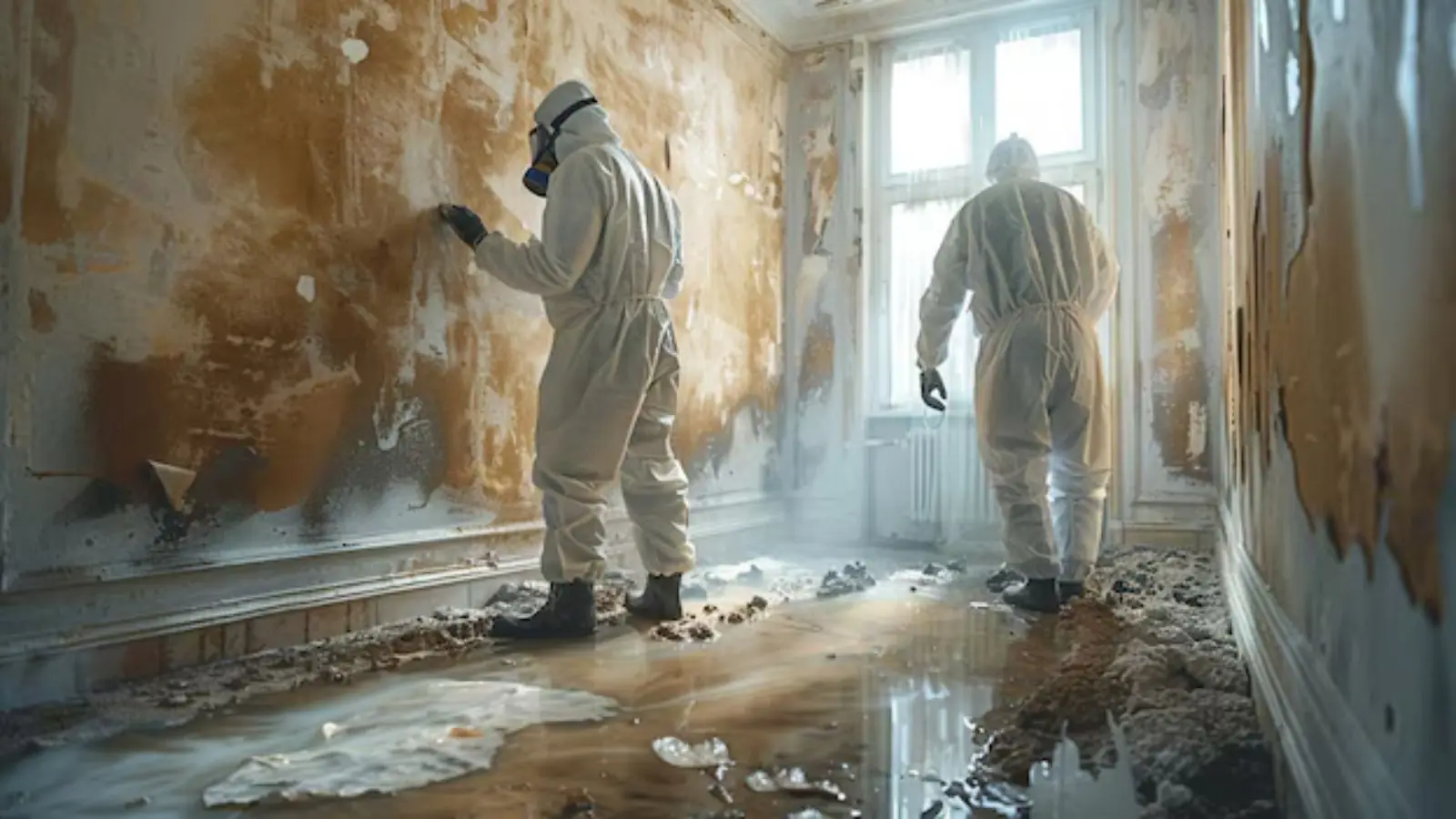
Musty Smell, Dark Spots or a Bathroom Corner That Keeps Coming Back?
A musty smell in a closet, dark spots near a shower ceiling or a patch of fuzzy growth behind a sink are the way most people discover mold. Mold grows where moisture lingers, so a spot that keeps returning usually means a leak or humidity problem is still active. The trade term for the cleanup is mold remediation, and it starts with finding the water.
What Mold Remediation Involves
Mold remediation removes mold growth from a building and corrects the conditions that allowed it. The EPA puts it simply: the key to mold control is moisture control. That is why the first step on any job is finding and fixing the water source, and why remediation and water mitigation so often go together.
The ANSI/IICRC S520 standard is the published reference for professional mold remediation. When you compare companies, ask each one whether its crews work to S520 and how they handle containment, removal and verification.
Inspect
Find the moisture source and map how far the growth extends.
Contain
Seal off the area and use air filtration so spores do not travel.
Remove
Take out affected porous materials and clean surfaces that can stay.
Verify
Confirm the area is dry and clean before rebuilding.
Mold Testing and Inspection
Inspection and testing are different things. An inspection looks for moisture and visible growth, including behind baseboards, under sinks and around windows. Testing takes air or surface samples, and its role is narrower than most people expect. The EPA says that in most cases, if visible mold growth is present, sampling is unnecessary.
Testing earns its place in a few situations: hidden mold you cannot see, verification after remediation, and documentation that a buyer, lender or landlord asks for. Independent clearance testing should be done by a third-party tester and not by the crew that did the removal, so the result is not self-graded. We cannot promise that any lender or buyer will accept a particular report.
| Situation | Typical approach | Who handles it |
|---|---|---|
| A small visible patch, under about 10 square feet, on a hard surface | The EPA says you can often handle it yourself with care once the moisture is fixed | Homeowner, after fixing the leak |
| More than about 10 square feet, or growth on drywall or carpet | Containment, removal of affected porous materials and cleaning | Remediation crew |
| Mold after sewage or floodwater | Treated as contaminated water first, then remediated | Restoration crew |
| Musty smell and nothing visible | Moisture inspection and, if needed, testing behind surfaces | Inspector or restoration crew |
| A buyer or lender asks for proof the mold is gone | Remediation followed by independent clearance testing | Remediation crew and a third-party tester |
Need someone to look at it?
Call and describe what you see. The scope and price are explained before any work starts.
Mold Removal and Black Mold Cleanup
Black mold is a popular label, but color alone does not identify a mold, and we do not diagnose mold types by sight. What matters in practice is how much there is, what it is growing on and whether the moisture is still active. Questions about health belong with a physician, and the EPA suggests consulting a health professional before starting cleanup if you have concerns.
Removal means containing the area, cutting out affected drywall or insulation that cannot be cleaned, using HEPA filtration, and cleaning and drying what remains. Do not paint or caulk over mold, since the EPA says to clean up the mold and dry the surface before painting. Bleach and scrubbing on porous materials usually miss growth below the surface.
What to do while you wait for an assessment: stay out of the affected area, keep the area dry, close the door and leave the air conditioner off if it would pull air through the space. What not to do: do not sand, scrape, brush or tear out material, and do not use a fan that blows across the growth.
Mold After Water Damage
Most mold in homes follows water. A leaking toilet supply, a failed sink connection, an air conditioner condensate line that backed up, a roof leak or water behind siding can all feed growth in walls and closets. The EPA advises drying water-damaged areas and items within 24 to 48 hours to prevent mold growth.
If you have had water damage in the last few days, emergency water removal and water damage cleanup come first because they get the moisture out. If the water sat longer and mold is already visible, remediation starts after the leak is fixed and the area is drying.
Keeping Moisture Under Control in Beverly Hills
Condos along Wilshire Boulevard and homes in the Flats and Trousdale Estates share the same basic risks: bathrooms with limited ventilation, closets against exterior walls, air conditioner drain lines and plumbing behind finished walls. Check those spots a few times a year for staining, soft drywall or a musty smell.
The EPA recommends keeping indoor humidity below 60 percent, ideally between 30 and 50 percent, and keeping air conditioning drip pans clean and drain lines flowing. A simple humidity meter costs little and tells you when to run a dehumidifier or call someone.
What Affects the Cost of Mold Remediation
Mold jobs are priced by how much is affected and how much containment is required. These five factors move the number most.
Size of the affected area
A closet corner and a whole wall cavity are different jobs.
Materials involved
Porous materials like drywall and carpet are removed, hard surfaces are cleaned.
Containment and air filtration
Larger or hidden growth needs sealed work zones and filtered air.
Moisture source repair
The leak or humidity problem has to be fixed, often by a plumber or roofer, or the mold returns.
Testing and rebuild
Clearance testing and replacing removed materials are priced separately.
Coverage for mold varies widely by policy and by what caused the moisture. Check your policy or ask your insurer.
Los Angeles County consumer guidance says mold removal work must follow EPA and Cal/OSHA rules for safe removal and disposal, and that contractors need a state license for work involving $1,000 or more in labor or materials. Questions about your own price? Call (424) 550-5662, and we will go over the scope and price before any work begins.
Common questions
Lenders and buyers usually want proof that the mold was removed and the area is clean. That typically means remediation followed by independent clearance testing from a third-party tester. Requirements differ, so ask the lender what documentation it accepts.
Visible fuzzy or spotted growth, a musty smell and a history of moisture are the usual signs. Testing can confirm what is present, but the EPA notes that in most cases sampling is unnecessary when growth is visible.
No. The EPA advises against painting or caulking moldy surfaces. Clean up the mold and dry the surface first, and fix the moisture source or the growth will come back.
That depends on moisture. Mold returns where moisture returns, so the leak must be fixed and humidity kept down. No honest company can promise it will never reappear.
Health questions belong with a physician. In practical terms, the questions are how much mold there is, where it is and whether the moisture is still active, and those decide the scope of work.
Yes. Our West Hollywood page explains coverage and ZIP codes.
Mold work in Beverly Hills ZIP codes 90210, 90211 and 90212 usually ties back to a wet event, so the related services are water mitigation for the first drying phase and water damage repair for the rebuild after the area passes clearance.