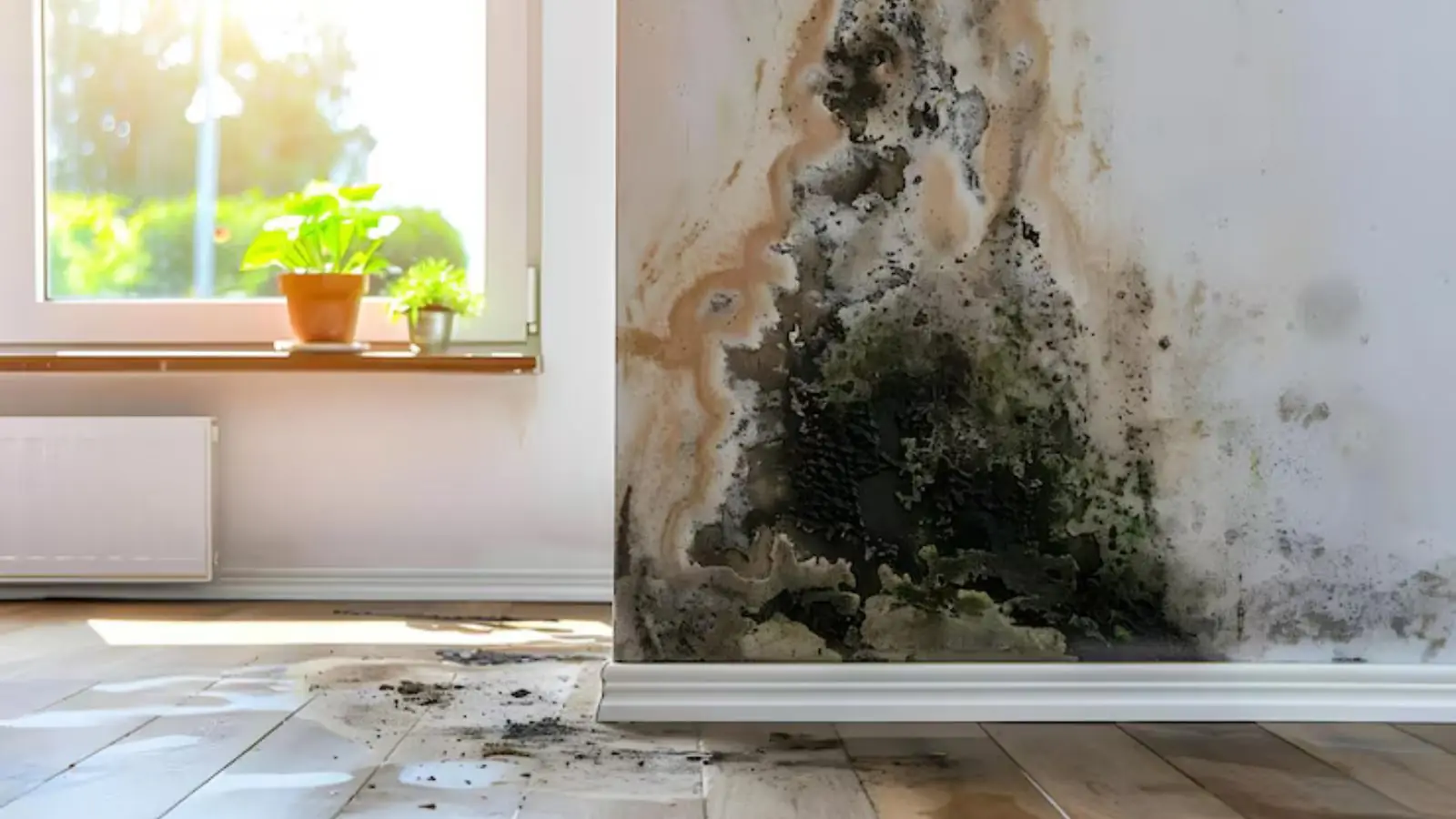
The Short Answer
Mold odors are usually described as musty, earthy or damp, like a wet basement, old books or soaked cardboard. Some people compare it to wet socks or rotting wood. The smell tends to be stronger in closed spaces and after rain.
There is no special smell for black mold. Many types give off similar odors, and the same musty smell can come from mildew, damp wood or old water damage. The color of growth does not identify what it is.
What Causes the Smell
Growing mold releases gases as it digests material. These are often called microbial volatile organic compounds. You smell them as a moldy or earthy odor.
The smell can come from visible growth, but often it comes from growth you cannot see, behind a wall, under flooring or inside a cabinet. That is why a smell with no visible source is a reason to look for hidden moisture.
| Smell | Possible cause | Next step |
|---|---|---|
| Musty or earthy, strongest in a closet or basement | Damp materials or hidden growth | Check for moisture and humidity |
| Sour, like wet towels | Damp fabric or a drain | Check laundry, drains and carpet |
| Sweet or chemical, with water damage | Materials breaking down while wet | Dry and inspect |
| Sewage, rotten eggs | Sewer gas or drain issue | Call a plumber |
| Stronger after rain | Water entering at walls or foundation | Check drainage and grade |
How to Trace an Odor
Note where it is strongest
Walk through the house. Smell near baseboards, closets, cabinet bases and vents.
Check humidity
A cheap hygrometer shows humidity. Readings consistently above about 60 percent can support growth.
Look for water signs
Stains, bubbling paint, warped trim and damp carpet are clues.
Inspect plumbing
Look under sinks, behind toilets and around water heaters and washing machines.
Check the HVAC
Dirty coils, drain pans and ducts can produce a musty smell when the system runs.
Use a moisture meter
Meters can find damp walls and floors without cutting them open.
Smell you cannot trace?
Call the 24/7 line. Moisture readings can find what you cannot see.
What the Smell Cannot Tell You
An odor can point to moisture, but it cannot tell you the type of mold, the amount or whether anyone's health is affected. We cannot answer health questions, and neither can your nose. If anyone has symptoms or a health concern, talk to a doctor.
Testing is also limited. For visible growth, the EPA treats sampling as generally unnecessary, and its guidance notes that no federal mold limits exist to read a result against.
What Not to Do
- Do not cover the smell with air fresheners or fogging products
- Do not cut into walls without knowing what is inside
- Do not paint over stains or growth
- Do not mix bleach with ammonia-based cleaners
Masking the smell leaves the cause in place. Find the moisture, dry it and remove affected materials. After that, the smell should fade.
When to Call a Crew
Call if
- The smell is strong and you cannot find a source
- It follows a leak, flood or sewage backup
- It is inside a wall, ceiling or under flooring
- It returns after you clean
- The affected area is larger than about 10 square feet
Other Causes of a Musty Smell
Not every musty smell is mold. Dirty drains, damp laundry, old books, stored cardboard and unused rooms can all smell stale. A clogged air conditioner drain pan or a dirty filter can produce a damp odor whenever the system runs.
Try the simple fixes first. Clean the drains, replace the filter, wash damp items and air out closed rooms. If the smell fades after these steps, moisture may not be the cause. If it remains, look deeper.
Reducing Odors After Drying
Once moisture is fixed and affected materials are removed, odors usually fade as the space dries. Ventilation and a dehumidifier help. Activated charcoal or baking soda can absorb remaining odors in small spaces.
Avoid products that only add fragrance. They cover the smell and make it harder to tell whether the cause is gone. If the odor persists after drying and cleaning, ask a professional to check for hidden moisture.
Why the Smell Comes and Goes
Odors from damp materials change with temperature and humidity. A smell may fade on a dry day and return when the weather turns, or become stronger when the air conditioning or heater starts. Warm, humid air carries odor more readily, and closed rooms hold it.
That is why a smell that comes and goes is still worth following. It may mean moisture is intermittent, such as a roof or wall that leaks only during rain. Note when the smell is worst, and share that with whoever inspects.
Hidden Moisture in Beverly Hills Homes
Many people assume mold is not a local problem in Southern California. In practice, moisture builds up in specific places, including bathrooms, kitchens, lower levels and spaces near plumbing.
A musty smell that returns after heavy rain often points to water entering through walls, roofs or foundations. Per the California Department of Insurance, flood losses generally sit outside standard homeowners coverage.
Source type: California Department of Insurance guidance
Odor questions
No. Mold odors are generally musty or earthy, and color does not identify the type. A lab test is the only way to identify a mold type.
Yes. Growth can be present without a strong odor, particularly in small areas or behind surfaces.
Moisture often increases after rain, and closed windows trap humidity. Check the roof, walls, gutters and lower levels for water entry.
If you suspect hidden moisture, see mold remediation and water mitigation. We also serve West Hollywood, and the service area page shows our coverage.