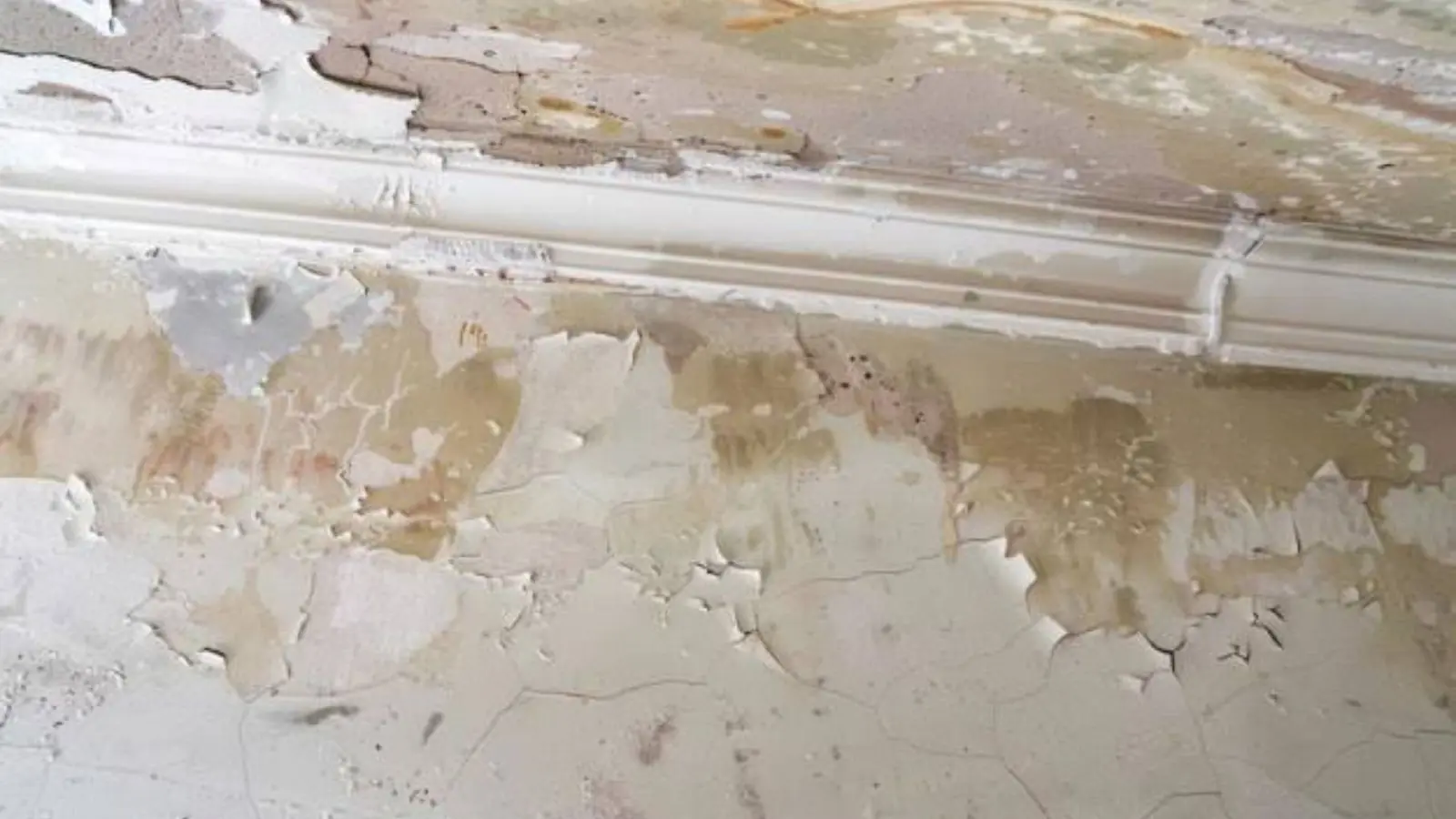
Why a Wet Wall Is Bigger Than It Looks
A wall is a hollow box. Behind the paint are drywall or plaster, framing, insulation and sometimes pipes and wiring. When water gets in, it wicks upward through the drywall, runs down inside the cavity and pools at the bottom plate.
What shows on the surface is only part of the loss. A stain the size of a hand can sit on a wall that is wet across several feet. Treat the stain as a clue and measure the rest.
What Drywall and Plaster Do When Wet
Gypsum drywall absorbs water readily. It softens, loses strength and can crumble at the edges. Paper facing can grow mold if it stays wet. Drywall that was wet only briefly and is dried quickly can sometimes be saved. Drywall that has been soaked or has been wet for days is normally replaced.
Plaster behaves differently. It is harder, and it holds water longer, so it dries slowly. Older plaster over wood lath can hide moisture in the lath and framing behind it. Moisture readings are the only reliable way to tell.
First Steps
Stop the water
Close the shutoff for the fixture or the unit. A wall cannot dry while water keeps arriving.
Open the area if safe
Remove baseboards, switch plates and outlet covers to let air in. Do not cut into wiring.
Cut power to wet circuits
If outlets or switches are wet, turn off that circuit at the panel.
Move air and dehumidify
Run fans toward the wall and a dehumidifier in the room.
Document
Photograph the wall, the source and any measurements you take.
Dry, Cut Out or Replace
| Wall condition | Likely decision | Why |
|---|---|---|
| Surface stain, wall dry and firm | Clean, seal and repaint | No moisture left in the materials |
| Damp but firm drywall, clean water, caught quickly | Dry in place with equipment | Drywall can recover if dried fast |
| Soft, swollen or crumbling drywall | Cut out and replace | Strength is lost |
| Dirty or sewage water | Remove and sanitize | Porous materials absorb contaminants |
| Wet insulation | Remove and replace | Insulation holds water and rarely dries well |
| Visible mold or musty odor | Contain, dry and assess | Disturbing it can spread it |
Cutting a flood cut, a clean horizontal cut made higher than the visible damage, lets a crew see inside and dry the cavity. The cut is repaired during the rebuild. It is faster and cleaner than trying to dry a closed wall.
Wall soaked or still wet?
Call the 24/7 line. A crew can be sent the same day when available.
Pipes, Wiring and Hidden Sources
Many wall leaks start at a pipe fitting, a supply line behind a sink, a shower valve or a drain. Others come from outside, such as a roof leak that runs down the inside of an exterior wall or a window that has failed.
If you cannot find the source, a plumber or a leak detection specialist can use acoustic or thermal tools without opening everything. Fix the source first, then deal with the wall.
Paint, Primer and the Finish
After the wall has dried, repairs follow the usual order: patch, tape, compound, sand, prime and paint. Use a stain-blocking primer if the wall had visible staining. Painting a full wall, from corner to corner, hides patch lines better than painting a small spot.
Do not paint or cover until you can answer yes
- The leak has been found and repaired
- Moisture readings match an unaffected wall
- There is no musty smell
- Insulation inside the cavity is dry or has been replaced
- Baseboards and trim have been checked for swelling
Exterior Walls Versus Interior Walls
Exterior walls fail for different reasons than interior ones. Failed window flashing, stucco cracks, roof valleys and blocked gutters send water into exterior walls, and the damage often shows low on the wall or around openings.
Interior walls usually fail from plumbing. Look at the walls shared with bathrooms, kitchens and laundry rooms. A wet exterior wall may need a roofer, a stucco or siding specialist or a window contractor in addition to the drying crew.
Bathroom and Kitchen Walls
These walls are the most likely to hide small plumbing leaks. Supply lines to toilets and sinks, shower valves and dishwasher connections all sit behind the wall surface. A slow drip can soak the cavity for months before a stain shows.
If you see staining near a fixture, shut the water to that fixture and check whether the stain stops growing. A plumber can pressure-test lines to find leaks inside the wall without tearing out more than necessary.
Beverly Hills Utility Work and Wall Leaks
Beverly Hills operates its own water system through the Public Works department. After a street repair or shutoff, water pressure returns and a weak fitting inside a wall can start to drip.
Pressure swings from large utility events, such as the 2018 Sunset Boulevard feeder line break described in local news reports, are a good moment to look at walls around sinks, showers and appliance connections for new dampness.
Source type: City of Beverly Hills Public Works information and local news reports
Wet wall questions
Sometimes. If it was clean water, caught quickly and the drywall is still firm, drying in place can work. Soft, swollen or contaminated drywall is usually replaced.
Look for stains, bubbling paint, warped baseboards or a musty smell. A moisture meter or thermal camera can confirm what you cannot see.
It depends on the source. Pipes inside the unit are usually the owner's responsibility, while shared risers are the association's. Report it in writing and check your governing documents.
See water mitigation for drying and water damage repair for the rebuild. We also cover West Hollywood, and the service area page shows the rest of where we work.