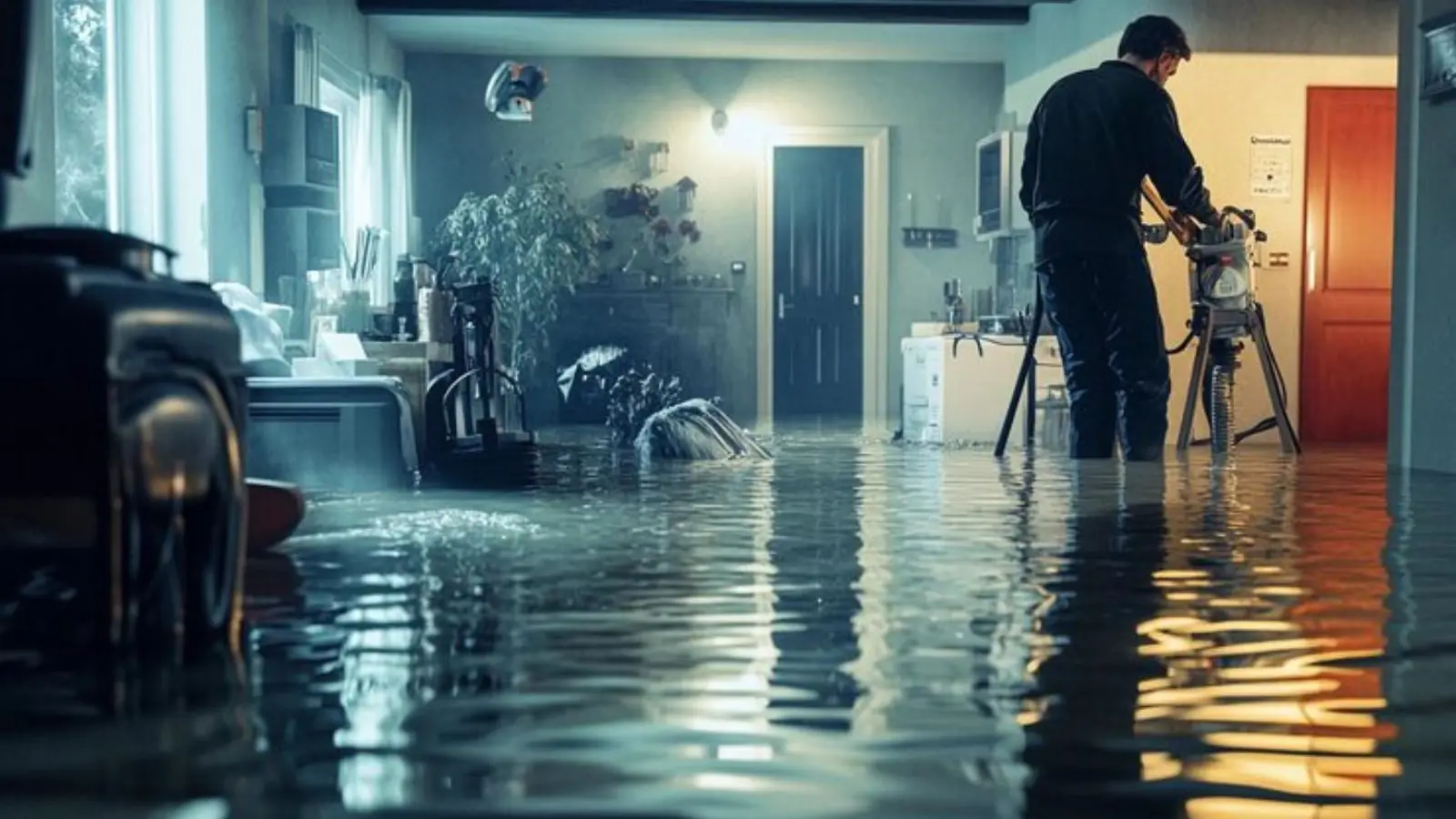
Why the Order of Steps Matters
Water damage is time-sensitive, and each step depends on the one before it. If water is still arriving, drying equipment is wasted. If standing water is not removed, a dehumidifier cannot keep up. If materials are rebuilt before they are dry, the problem comes back inside the wall.
Remediation is the part between the emergency and the rebuild. It stops the damage from spreading, removes what cannot be saved and dries what can. The rebuild comes after.
The Steps in Order
Stop the source
A plumber, building manager or utility closes the leak. Remediation cannot start until water stops moving.
Assess and classify the water
The crew identifies the water type and how far it has traveled, using moisture meters and thermal imaging.
Remove standing water
Pumps and extractors remove bulk water from floors, garages and lower levels.
Remove what cannot be dried
Wet carpet padding, soaked insulation and swollen drywall are cut out and bagged.
Dry the structure
Air movers and dehumidifiers pull moisture out of framing, subfloor and wall cavities.
Clean and sanitize
Surfaces are cleaned, and contents are cleaned or removed depending on the water type.
Monitor to a dry standard
Moisture readings are repeated until the materials reach a dry level.
Rebuild
Drywall, flooring, paint and trim are replaced once the structure is confirmed dry.
Water Categories Decide the Plan
The industry standard for water damage, ANSI/IICRC S500, sorts water into three categories. Category 1 comes from a clean source such as a broken supply line. Category 2 is gray water, such as a washing machine overflow. Category 3 is black water, including sewage and floodwater, and is considered unsanitary.
| Category | Typical source | What changes |
|---|---|---|
| Category 1 | Supply line, faucet, ice maker | Most materials can be dried in place |
| Category 2 | Dishwasher, washing machine, sump overflow | More cleaning, porous materials often removed |
| Category 3 | Sewage, floodwater, rising groundwater | Removal and sanitizing, protective equipment |
Water can also change category over time. Clean water that sits for days can degrade, which is another reason to call quickly.
Drying Is Measured, Not Guessed
A room can feel dry long before it is. Wet drywall, framing and subfloor hold moisture that the air does not show. Crews use moisture meters, and often thermal cameras, to find wet areas behind walls and under floors, then set air movers and dehumidifiers to match.
Readings are taken again each day and compared against a dry reference reading from unaffected materials. When the numbers match, drying is finished. That is the record you can hand to an insurer or a buyer later.
Ask any company which standard they follow
The IICRC publishes S500 for water damage restoration and S520 for mold. Ask any company you call whether they follow these standards, and ask how they document drying. A clear answer is easier to give when the work is actually done that way.
Need a crew for the first steps?
Call the 24/7 line. Scope and price are explained before work starts.
Documentation Throughout
Good records start at the first call. Photograph the source, the standing water and every affected room. Keep a list of damaged contents, with brand and approximate age. Save receipts for emergency repairs.
Ask the crew for a written scope, the moisture readings, a list of equipment placed and a summary of what was removed. These documents support an insurance claim and protect you if the property is sold.
What Slows the Process Down
- Water that is still leaking behind a wall
- Hidden pockets under cabinets, tile or built-ins
- Materials that were left wet for several days before the call
- Building access limits, such as elevators, parking and quiet hours
- Waiting for insurer or association approval before starting
Do not wait for approval to protect the property. Emergency mitigation, such as stopping water and starting to dry, is usually appropriate before the paperwork is complete. Keep records of what was done and why.
Who Does What on a Water Damage Job
A water loss often involves several people. A plumber stops the leak and repairs the line. A mitigation crew removes water and dries the structure. An insurance adjuster reviews the claim. A general contractor or repair crew handles the rebuild. In multifamily buildings, management and an association may be involved too.
Knowing who does what saves time. The mitigation crew documents the loss, but it does not decide coverage. The adjuster decides coverage, but does not direct the drying. Keep each party informed and keep copies of everything.
Contents and Personal Belongings
Belongings are part of the remediation. Items on wet floors, in lower cabinets or near the source may need to be moved, cleaned or discarded. Clean-water exposure often allows cleaning. Contaminated water usually does not.
Make a list of affected items with a photo, a brand and a rough age. Set aside what is damaged but do not throw it out until the adjuster has had a chance to see it, or until you have documented it well. Valuable or sentimental items can be sent for specialist cleaning.
What to do while you wait: shut off the water, lift belongings and keep out of any water that may be dirty. What not to do: do not use household vacuums on water, do not touch wet outlets and do not remove walls or flooring before the crew has documented them.
Utility Work and Pressure Changes in Beverly Hills
Beverly Hills runs its own water system through the Public Works department, and the city posts an annual water quality report on its website. After any main repair or shutoff in your area, water pressure returns suddenly, which can expose a weak supply line or fitting.
Local news reports from 2018 describe a Sunset Boulevard feeder line failure near Alpine Drive that disrupted traffic and led to conservation rules. After any repair or shutoff near you, test faucets, toilets and appliance connections for new drips.
Source type: City of Beverly Hills Public Works information and local news reports
Remediation questions
A typical drying job lasts several days, but the real answer depends on the water category, the materials and the amount of moisture. Readings, not the calendar, decide when drying is done.
No. Emergency steps like stopping water and starting to dry are usually appropriate right away. Document everything and tell your insurer promptly.
Beverly Hills Public Works manages the city water system. If the leak is on the street side of the meter, the utility handles it. Inside the building, a plumber and a mitigation crew handle it.
For the step-by-step work, see water mitigation and emergency water removal. Cleanup after dirty water is covered under water damage cleanup. We also work in West Hollywood, and the service area page lists where crews are sent.