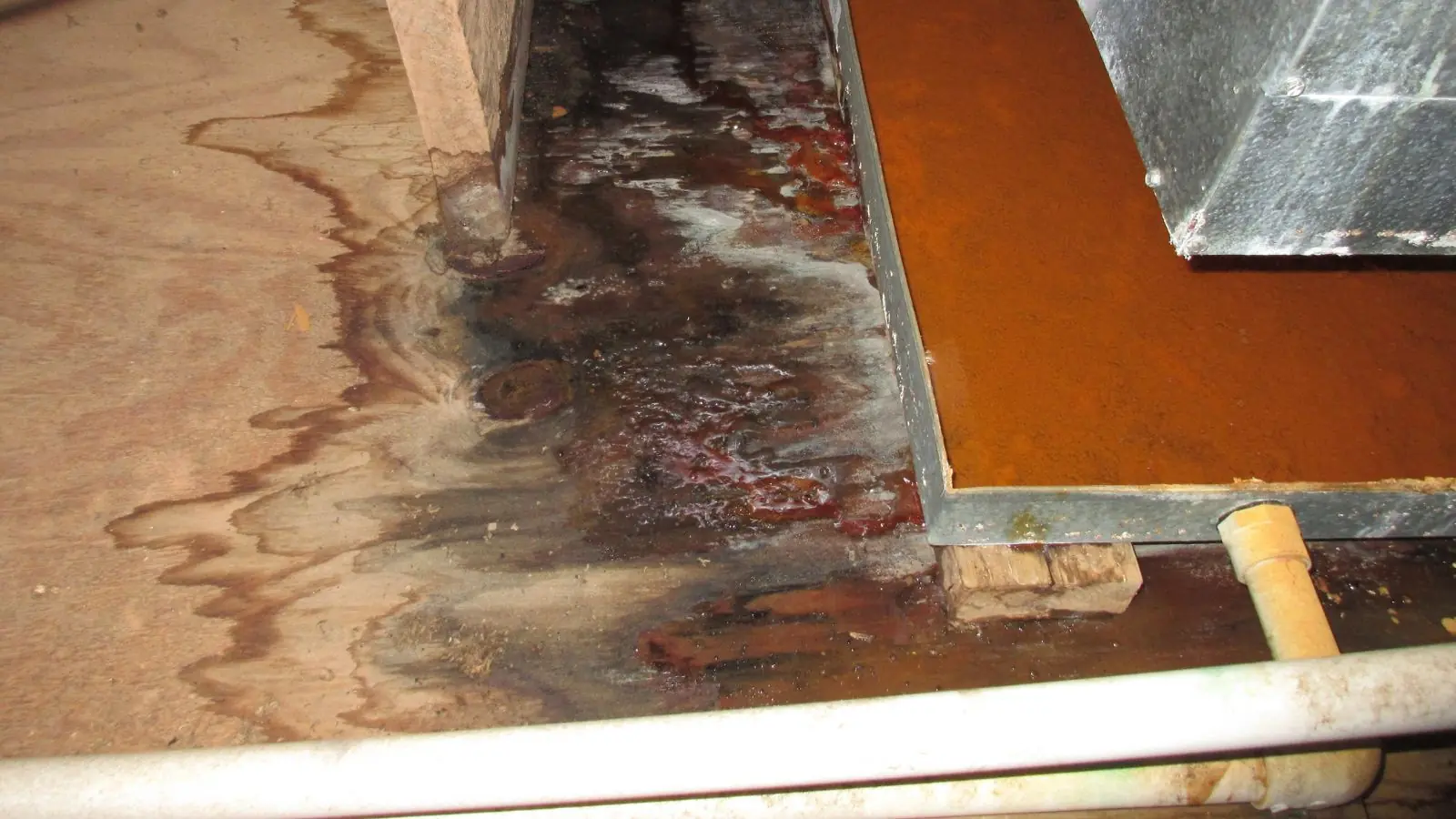
The Floor Is Only the Top Layer
A floor is a system. Under the surface you may have padding, underlayment, a subfloor and framing. Water that reaches the floor often reaches these layers too, and they decide how long the problem lasts.
This guide covers non-wood floors. For hardwood, see our separate wood floor guide. The first steps are the same for every type. Stop the source, remove standing water, lift what sits on the floor and move air through the room.
Floor Type by Floor Type
| Floor type | How it reacts | Usual outcome |
|---|---|---|
| Ceramic or porcelain tile | Tile itself is water-resistant, grout and subfloor are not | Often saved, subfloor may need drying |
| Laminate | Fiberboard core swells and edges lift | Usually replaced if soaked |
| Luxury vinyl plank | Surface is water-resistant, water can pool underneath | Lift, dry underneath, reuse if undamaged |
| Sheet vinyl | Water can get under seams and stay trapped | Often lifted, dried and re-laid |
| Carpet and pad | Pad holds water, carpet can stretch | Clean water: carpet may be saved, pad replaced |
| Concrete slab | Absorbs moisture slowly, releases it slowly | Dried, then checked before covering |
Tile and Grout
Tile is hard to harm, but the surface is not the whole story. Grout is porous and absorbs water, and the setting bed or subfloor beneath can stay wet. A tile floor that sounds hollow when tapped may have loosened from its base.
Water that spreads under tile is slow to dry because the tile covers it. A crew may drill small holes or lift a few tiles to dry the area below.
Laminate and Vinyl
Laminate has a fiberboard core that swells when soaked, and it rarely returns to its original shape. Edges lift, seams open and the surface bubbles. If laminate has been wet for more than a short time, replacement is usually the answer.
Luxury vinyl plank and sheet vinyl resist water on top, but water seeps in at the seams and edges. Lifting the planks to dry the subfloor often works, as long as the planks are not warped.
Carpet and Pad
Carpet outcomes depend on the water category. Carpet exposed to clean water for a short time can sometimes be dried in place or lifted and cleaned. Carpet exposed to sewage or floodwater is generally removed and discarded.
The pad underneath absorbs far more water than the carpet. Even with clean water, wet padding is usually replaced, since it dries slowly and can hold moisture against the subfloor.
Floor wet and water still spreading?
Call the 24/7 line. A crew can be sent the same day when available.
Subfloors and Concrete Slabs
Plywood and OSB subfloors swell when wet and can lose strength. If a subfloor has soaked up water and stayed wet, it may need partial replacement. Concrete slabs hold moisture and release it slowly, and covering a damp slab can lead to adhesive failure, odor and mold.
Moisture tests tell you when a slab or subfloor is ready for new flooring. Do not install new flooring until readings are in the safe range for that product.
Questions to answer before a new floor goes down
- Is the source repaired and verified?
- Have moisture readings come down and stayed down?
- Has wet padding or underlayment been removed?
- Does the new flooring maker require a specific moisture level?
- Has the subfloor been checked for swelling or soft spots?
Moisture Testing Before New Flooring
Floor installers and flooring makers usually require the subfloor or slab to be below a certain moisture level. Installing flooring too soon can void a warranty and lead to adhesive failure, buckling or odor.
Ask for moisture readings in writing, along with the reference readings from unaffected areas. Concrete slabs may need a specific test method. Do not rely on how a floor feels. A slab can feel dry on the surface and still release moisture for days.
Multi-Story and Condo Considerations
In a multi-story building, water on one floor often reaches the unit below. A leak that seems small on your floor can have caused damage in a ceiling beneath. Notify management quickly, and let the unit below know.
Condo associations may also limit the type of flooring you can install and require sound-rated underlayment. Ask before you choose replacement materials, so the new floor is approved.
Appliances That Cause Floor Leaks
Many floor losses start with an appliance. Washing machine hoses, dishwasher lines, refrigerator ice maker connections and water heaters all sit on or near floors. A hose that fails can release a large volume in minutes if no one is home.
Replace old rubber hoses with braided steel ones, and check them for bulges or rust. Consider a drip pan and a leak sensor under the water heater and the washer. Know where the shutoff valve for each appliance is.
Garages, Lower Levels and Storm Runoff in Beverly Hills
Some Beverly Hills properties have lower levels, garages or storage areas cut into hillsides. These spaces collect water first when runoff or a plumbing failure sends it downhill.
Before and after storms, check gutters, drains and the grade around lower-level walls. A storm runoff problem is different from a plumbing leak, and flood damage is usually excluded from standard homeowners policies, according to the California Department of Insurance.
Source type: California Department of Insurance guidance
Floor questions
Often yes. Tile resists water, but the subfloor and the grout may need drying, and loose tiles may need to be lifted.
No. Carpet from a clean water source and caught quickly can sometimes be dried or cleaned. The pad is usually replaced. Sewage or floodwater means removal.
Look at drains, gutters and grade near lower-level walls, and test sump pumps if you have them. A blocked drain is a common cause of water entering lower areas.
Standing water starts with emergency water removal, followed by water mitigation for drying. For rebuilding, see water damage repair. We also cover West Hollywood, and the service area page lists where crews go.