Why Early Signs Matter
Water inside a wall is easy to miss until it becomes expensive. A slow leak can run for weeks with nothing more than a slight smell. By the time paint peels, the drywall and framing may have been wet long enough to deteriorate.
According to EPA guidance, wet materials should be dried within 24 to 48 hours to limit mold growth. The earlier a leak is caught, the more likely the materials can be dried instead of replaced.
Visible Signs
| Sign | What it can mean | Where to look |
|---|---|---|
| Brown, yellow or tan stain | Water has passed through the drywall or paint | Below windows, under bathrooms, near ceilings |
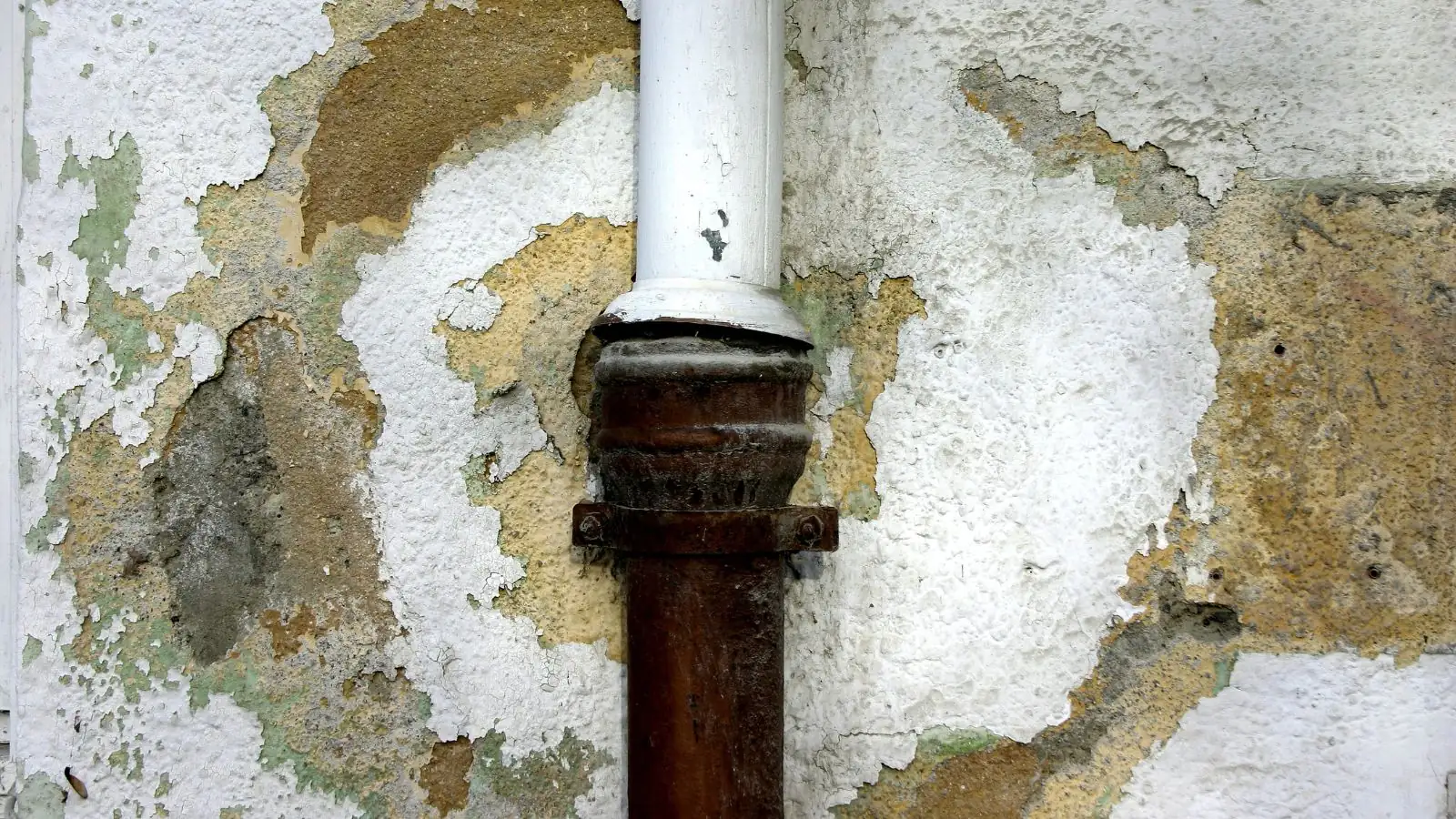
| Bubbling or peeling paint | Moisture behind the paint layer | Walls near showers, sinks, exterior corners |
| Cracked or sagging drywall | Drywall has absorbed water and weakened | Ceiling-wall joints and low on walls |
| Warped or swollen baseboards | Water at the wall base | Along floors near appliances |
| Dark spots or growth | Moisture has been present for some time | Corners, behind furniture |
| White powdery residue | Minerals left behind by moisture moving through masonry | Exterior and garage walls |
Signs You Can Smell or Hear
A musty or earthy odor that does not go away after cleaning is one of the strongest clues. It often means damp materials inside a cavity. Smell it near baseboards, in closets against exterior walls and near outlets.
Sound also helps. A faint hiss or drip when everything is off can point to a pressurized line leaking in the wall. A knocking sound when you shut a faucet is a different problem, but it also stresses pipes and fittings.
Signs in the Bills
An unexplained rise in the water bill is a common warning. Compare this month to the same month last year, and check the meter with all water off. If the dial or digital reading still moves, water is going somewhere.
In multifamily buildings, the meter may be shared, so ask building management whether they have seen increases or have scheduled leak checks.
Confirming the Problem
Look at the pattern
Stains in a line below a bathroom or kitchen often point to a supply or drain line.
Touch and press
Gently press the area. Soft, cool or damp drywall is a bad sign.
Use a moisture meter
A simple meter shows whether the wall is wetter than a reference spot.
Check the meter test
Turn off all water inside and see if the meter still moves.
Call a plumber or crew
If readings are high or the source is unclear, bring in help before cutting.
Seeing signs in your walls?
Call the 24/7 line. Moisture readings can confirm what is behind the paint.
What Not to Do
- Do not paint over a stain without finding the cause.
- Do not cut into walls near wiring until power is off.
- Do not dry a wall with heat guns, which can damage materials and spread moisture.
- Do not mix bleach with ammonia-based cleaners.
Cleaning visible growth is not the same as fixing the cause. If the wall is damp, growth can return quickly. Dry first, and then clean or replace materials as needed.
Slow leaks are the quiet ones
Burst pipes get attention. Slow leaks do not. A small drip behind a tub or in a supply line can wet a wall for months. Most insurance policies treat gradual or long-term leaks differently from sudden ones, so noticing and documenting early matters.
Signs Outside the Wall
Sometimes the first hint is outdoors. Look at the roof for missing or lifted shingles or tiles, at gutters and downspouts for blockages, and at the base of exterior walls for soil piled against the siding. Stucco cracks, peeling exterior paint and efflorescence on masonry all point to moisture.
Check window and door frames for gaps in the caulk. Water that enters here will usually appear inside as a stain on the wall below or beside the opening.
Keeping a Simple Log
A small notebook or phone note can help. Write the date, the location, what you saw and any weather or plumbing work nearby. If a stain grows, add a photo with a coin or ruler for scale.
This record shows whether a problem is growing, helps a plumber or crew find the source and supports an insurance claim if you need one. It also helps in a condo, where you may need to show management that you reported the issue promptly.
Why Insurers Care About Timing
Policies often treat sudden leaks and slow, long-term seepage differently. If a stain has been present for months and was ignored, a claim may be harder. If you notice a sign, document it with a photo and date, and act quickly to stop the water.
Read your policy for language on continuous or repeated seepage, and ask your insurer or agent how it applies. Prompt action and good records generally help whatever the outcome.
Older Systems in Beverly Hills Homes
Many Beverly Hills homes were built decades ago, and some still have original galvanized or copper supply lines, cast iron drains or aging fittings. Older materials can fail slowly through corrosion or at the joints.
If your home is older and you are seeing signs, a plumber can check line condition and pressure. The city of Beverly Hills posts its annual water quality report online, which can help owners understand what the supply carries.
Source type: City of Beverly Hills Public Works information
Detection questions
Often a faint musty odor or a slight discoloration. A rising water bill with no change in use is another early warning.
A moisture meter or thermal camera can show wet areas without cutting. Visual signs alone are not reliable.
They can be, because older pipes and fittings wear out. Age alone is not proof, but it is a reason to check supply and drain lines if you see signs.
If you find a wet wall, start with water mitigation and see water damage repair for the rebuild. We also serve West Hollywood, and the service area page covers our coverage.