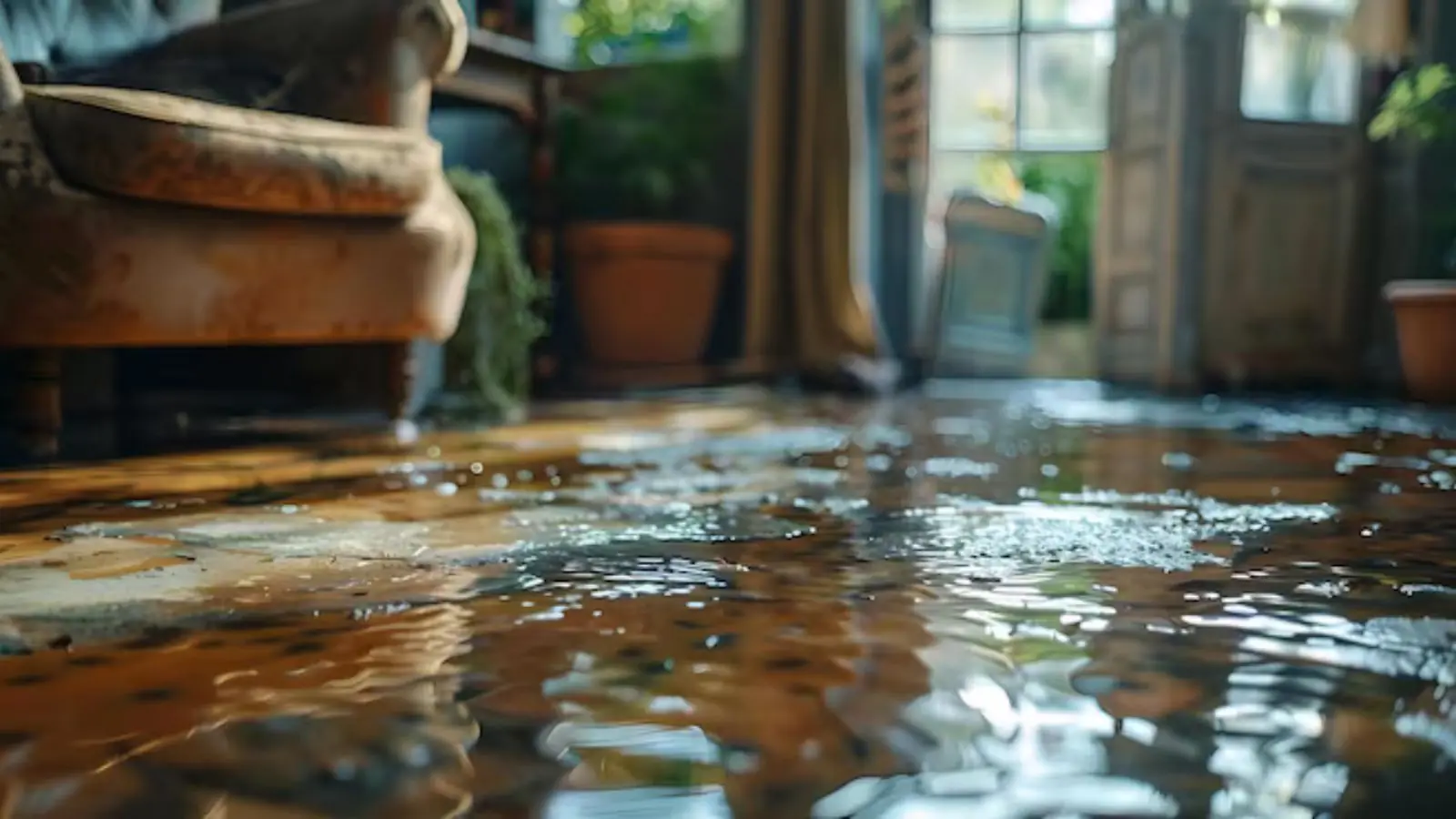
Wood Reacts to Water in Different Ways
Solid wood absorbs and releases moisture. Veneered pieces have a thin wood face glued to a core, often particleboard or MDF. Painted wood has a coating that can hide trouble. Each responds to water differently, which is why the repair should match the piece.
This guide covers furniture, trim, doors and cabinets. For wood flooring, see our separate guide.
Surface Marks and White Rings
White rings or cloudy marks on a finished piece usually mean moisture is trapped in the finish, not in the wood. These marks sit in the top layer and can often be reduced without sanding.
Start gently. Wipe the surface dry, then try a soft cloth with a small amount of non-gel white toothpaste or a baking soda paste, working with the grain. Another option is a low-heat hair dryer, moved constantly, which can release trapped moisture. Test in a hidden spot first.
Swelling and Warping
| Damage | Likely cause | What to try |
|---|---|---|
| White ring or haze | Moisture trapped in the finish | Dry slowly, gentle polish, re-wax |
| Dark ring or black stain | Water reached the wood itself | Sand, bleach with wood bleach, refinish |
| Swelling at joints or edges | Wood or core absorbed water | Dry fully, then sand and refinish if solid wood |
| Warped door or panel | Uneven drying | Dry slowly with weight, replace if cracked |
| Bubbling veneer | Glue softened by moisture | Reglue small areas or replace the piece |
| Swollen particleboard or MDF | Core absorbed water | Usually replace |
Steps for Solid Wood
Dry slowly
Move the piece to a ventilated room. Avoid direct heat, which can crack the wood.
Wait for it to stabilize
Let it sit until it feels dry and no longer shifts. This can take days.
Clean the surface
Wipe with a mild soap solution and dry thoroughly.
Sand lightly
Sand with the grain, starting with medium grit and finishing with fine.
Treat dark stains
Use wood bleach on dark stains only, and follow label directions.
Refinish
Apply stain, sealer or paint to match, then add a protective topcoat.
Cabinets and Trim
Kitchen and bath cabinets suffer most from leaks under sinks. Solid-wood doors and frames can often be dried and refinished. Particleboard boxes swell at the base and rarely recover, so the bottoms and side panels may need replacing.
Baseboards and door casings often wick water from the floor. Pull wet trim to let the wall base dry, and replace pieces that have swollen or split. Painted trim can usually be re-installed after drying if it is not damaged.
Cabinets or trim soaked?
Call the 24/7 line. A crew can dry the area before it spreads.
When to Replace Instead of Repair
- The piece is particleboard or MDF and has swollen
- The wood is cracked, split or soft
- Veneer has lifted over a large area
- Dark staining covers much of the surface
- A musty smell remains after drying
A piece with sentimental or antique value is worth a conversation with a furniture restorer, who can often do more than a general repair. Do not sand or strip an antique before getting advice.
Check What Is Behind the Wood
Wet cabinets and trim often mean a wet wall or floor behind them. Check behind the cabinet, at the wall base and under the sink for moisture. Fixing the wood while moisture remains behind it is a short-term repair.
If you find wet drywall, wet insulation or a musty smell, treat it as a larger job and bring in a crew.
Doors, Windows and Exterior Wood
Exterior wood faces water every year. Door bottoms, window sills and trim can swell, split or rot where paint has failed. Small areas of soft wood can sometimes be dug out and filled with wood hardener and epoxy filler, then sanded and painted.
If the wood is spongy, crumbles or the rot extends into framing, replacement is the better option. Probe suspect spots with a screwdriver. If it sinks in easily, the wood has lost strength.
Finishing Choices
The finish protects the repair. Oil-based finishes tend to resist moisture well but yellow with time. Water-based finishes stay clearer and dry faster. Paint provides the most coverage and hides repairs.
On cabinets, a durable topcoat on the bottoms and edges slows water absorption. On exterior wood, prime all sides, including cut ends, before painting. Water enters most easily through unsealed end grain.
What Not to Do With Wet Wood
Do not use a heat gun, hair dryer on high or direct sun to force-dry a wet piece, since fast drying splits wood. Do not sand a piece that is still damp, and do not stack other items on a swollen panel. What to do instead is dry it slowly, keep it level and wait until it stops moving.
Preventing the Next Water Mark
Most damage on furniture is preventable. Use coasters under drinks and plants, wipe spills quickly and keep pieces away from windows and vents where condensation collects. Place a tray under potted plants and check it regularly.
In kitchens and baths, keep cabinet interiors dry and check under sinks monthly. A small leak found early may cost only a new fitting. Left alone, the same leak can ruin a cabinet base.
Historic and Antique Pieces in Beverly Hills Homes
Many Beverly Hills homes include built-in cabinetry, paneling and furniture that are decades old. Finishes on older pieces may contain lead or other legacy materials, and stripping or sanding them can create dust.
If a piece is old and valuable, talk to a restorer before refinishing. According to U.S. Environmental Protection Agency guidance, homes built before 1978 may have lead paint, and safe practices apply to sanding and scraping.
Source type: U.S. Environmental Protection Agency lead renovation guidance
Wood repair questions
Try drying slowly and polishing gently, or a mild abrasive such as non-gel toothpaste, working with the grain. Test a hidden spot first.
Solid wood often can after drying. Particleboard cabinets that have swollen usually cannot and need replacement.
Get advice from a restorer first. Sanding or stripping can lower the value, and older finishes may contain lead.
For larger leaks, see water damage repair and water mitigation. We also serve West Hollywood, and the service area page shows more of our coverage.