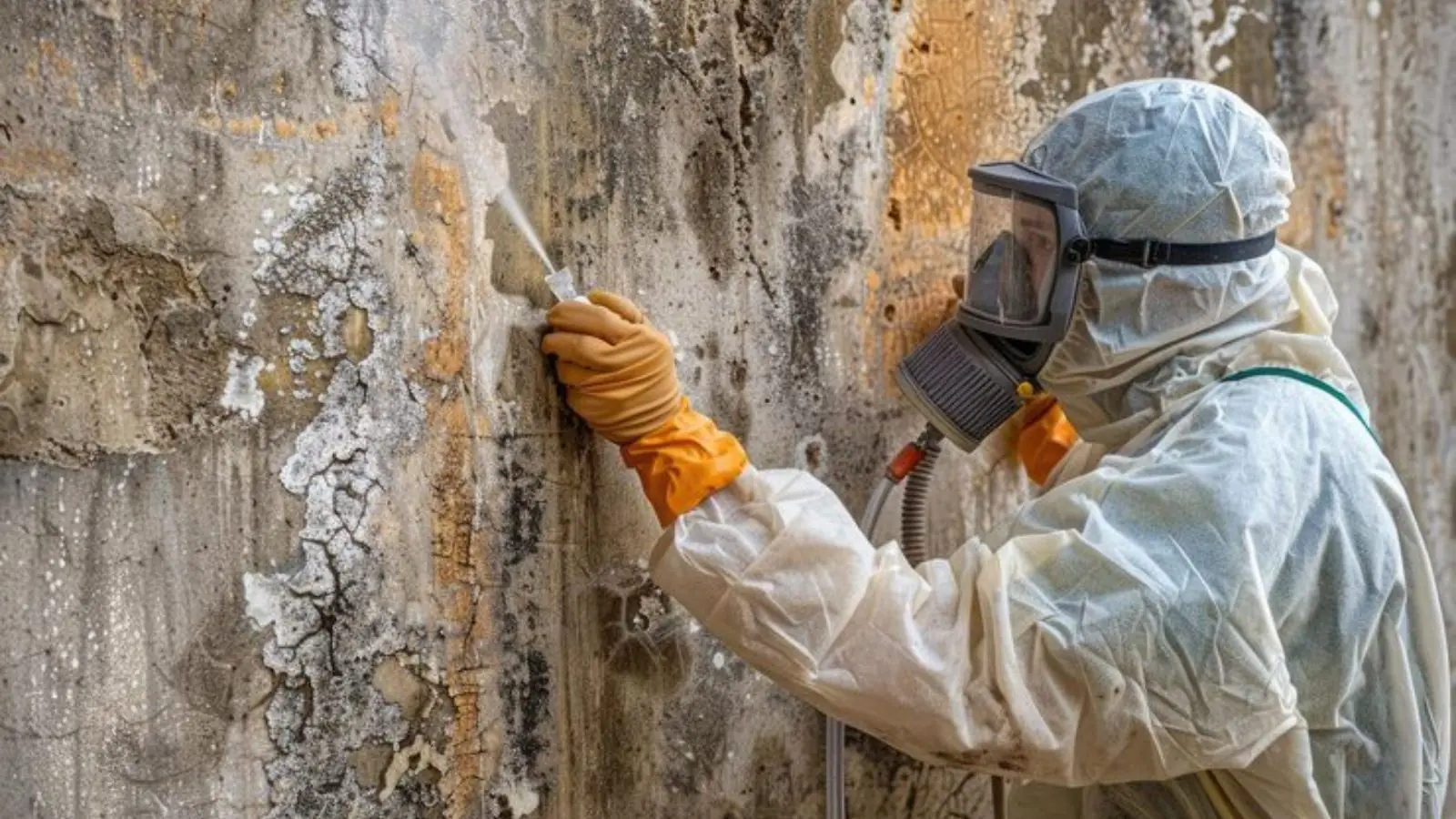
First, Decide Whether to Clean It Yourself
Cleaning is not always the right first move. The U.S. Environmental Protection Agency says areas smaller than about 10 square feet, roughly 3 feet by 3 feet, can usually be handled by the homeowner. Larger areas, or areas with significant water damage, call for more rigorous methods.
Sewage or contaminated water changes the answer. If the growth followed a backup, flood or other dirty water, call a professional. Do not start cleaning until you know the size and the source.
| Situation | Usual answer |
|---|---|
| Under about 10 square feet on a hard surface | Homeowner cleaning with precautions |
| Larger than 10 square feet | Professional recommended |
| Growth inside walls or under flooring | Professional recommended |
| Sewage or floodwater involved | Professional required |
| Musty odor with no visible source | Professional assessment |
| Anyone in the home with a health concern | Talk to a doctor and a professional first |
Fix the Moisture First
A clean surface will grow again if moisture remains. Find the source before scrubbing. That may be a leaking pipe, a window well, a blocked drain, a crack in a foundation wall or condensation on cold surfaces.
Once the source is addressed, dry the area with fans and a dehumidifier. Mold is much easier to remove from a dry surface than a wet one.
What You Need
- N95 respirator or better, rated for particles
- Gloves and goggles without vent holes
- Disposable coveralls or old clothes you can wash
- Heavy trash bags and plastic sheeting
- Detergent and water, scrub brushes and rags
- HEPA vacuum if you have access to one
Cleaning Steps for a Small Area
Isolate the area
Close doors, cover vents and seal the work area with plastic. Do not run a fan that blows spores through the house.
Gear up
Put on the respirator, gloves and goggles before you disturb anything.
Remove loose growth
Gently vacuum with a HEPA unit if available, or wipe with damp rags.
Scrub with detergent and water
Hard surfaces can be washed. Rinse and dry thoroughly.
Discard porous items
Carpet, ceiling tiles, insulation and soaked drywall with growth should be removed and bagged.
Dry everything
Dehumidify until the surface and the air are dry.
Watch the area
Check weekly for new growth and new moisture.
About Bleach
Many people reach for bleach. The EPA states that bleach is not recommended as a routine part of mold cleanup. Killing mold is not enough, since it must be removed. Bleach also does not penetrate porous surfaces well.
Never mix bleach with products that contain ammonia, which can release toxic gas. If you use any disinfectant, ventilate the area and follow the label.
Growth larger than a small patch?
Call the 24/7 line. Scope and price are explained before work starts.
What to Throw Away
Porous materials with growth are usually removed instead of cleaned. That includes drywall, ceiling tiles, insulation, carpet, padding and cardboard boxes. Bag them in heavy plastic before carrying them through the house.
Items you want to keep, such as photos, books or documents, may be cleaned by a restoration specialist. Do not use a household vacuum without a HEPA filter, since it can spread spores.
Stop and call a professional if
- The area is larger than about 10 square feet
- Growth is inside a wall, under flooring or in the ceiling
- There is sewage or floodwater involved
- The musty odor remains after you clean
- Moisture returns within days
Cleaning Stored Belongings
Hard items such as plastic bins, metal tools and glass can usually be wiped with detergent and water, then dried. Fabric, paper, cardboard and upholstered furniture are more difficult. If growth is visible and the item has little value, discard it.
For items you want to keep, such as books, photographs and documents, a specialist may be able to clean them. Do not clean paper items with water. Keep them separate in a dry, ventilated space until you can get advice.
Preventing Regrowth
- Keep humidity in the 30 to 50 percent range
- Direct downspouts away from the foundation
- Seal cracks in lower walls and floors
- Store items on shelves with space around them
- Check for new damp spots after rain
Regrowth almost always means moisture returned. If a cleaned area darkens again within weeks, look for a leak or a change in drainage. A simple weekly check of walls and corners is enough to catch most problems early.
Cleaning Up Safely After Work
When you finish, bag disposable gear and wipe surfaces near the work area with a damp cloth. Wash your clothes separately in hot water, and wash your hands and face. Do not carry contaminated items through clean rooms.
Leave the dehumidifier running until the space reads in the normal range. Keep the plastic barrier up until you are satisfied the area is dry, clean and free of odor.
Storm Runoff and Lower Levels in Beverly Hills
Lower levels cut into a hillside are among the first places in a Beverly Hills property to show moisture after heavy rain. A wet storm followed by a musty odor in a garage or storage area is a typical pattern.
California Department of Insurance guidance says a standard homeowners policy usually leaves out flood damage. If your lower level took on storm water, read your policy and ask your insurer before work starts.
Source type: California Department of Insurance guidance
Cleaning questions
Small areas on hard surfaces can usually be cleaned with protective gear. Larger areas, hidden growth and sewage call for a professional.
Usually not. The EPA says sampling is generally unnecessary when mold is visible, and there are no federal limits to compare results against.
That points to a drainage or water entry problem. Check gutters, drains and grade, and ask a plumber or drainage contractor to inspect it.
Our mold remediation crews handle larger jobs, and water mitigation addresses the drying. We also cover West Hollywood, and the service area page shows where we go.