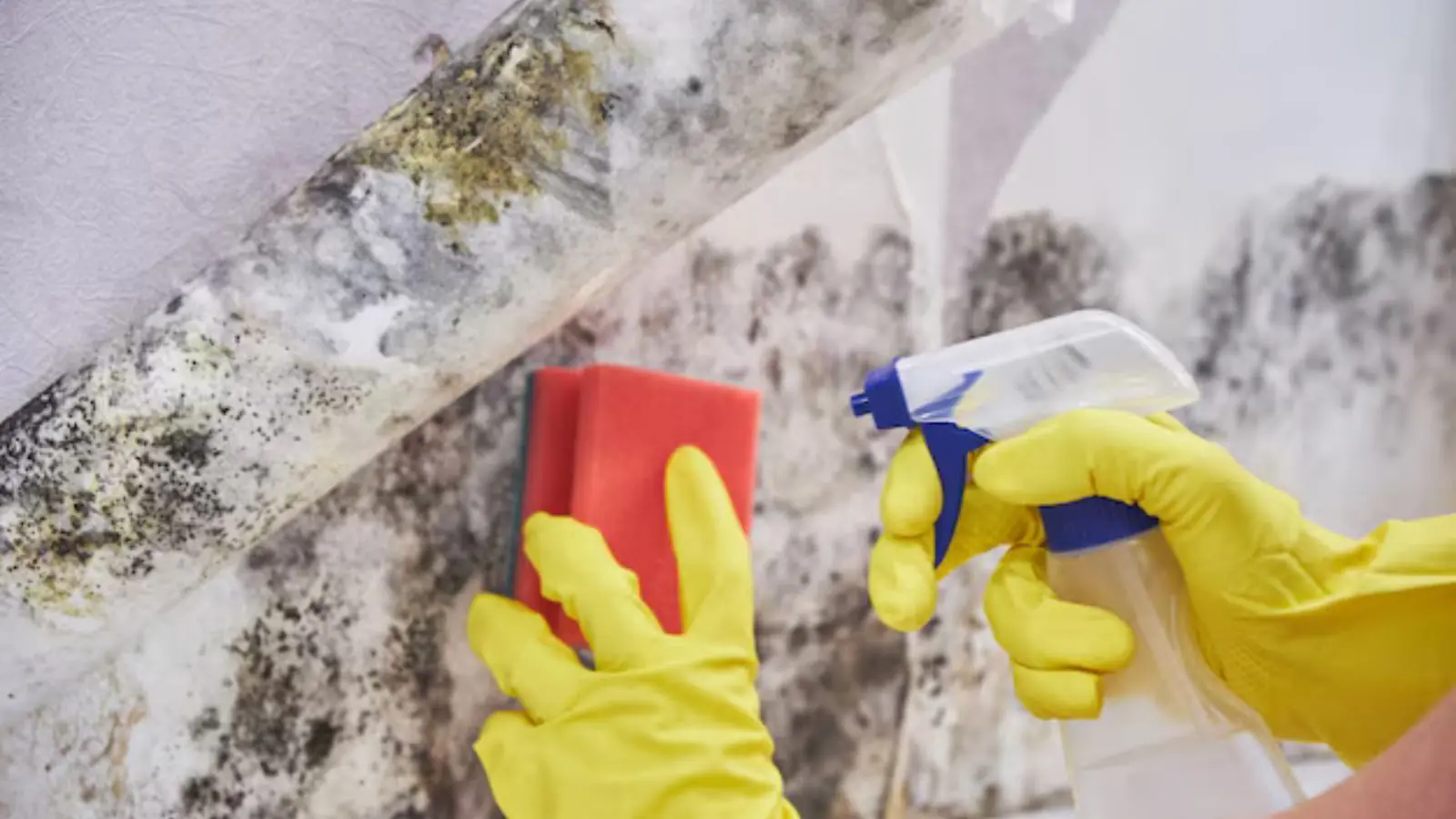
Why Showers Grow Dark Spots
A shower is warm, wet and full of soap residue, which is food for growth. Grout is porous, caulk breaks down over time, and steam settles on ceilings and corners. Even a clean bathroom can show dark spots if moisture lingers.
The color tells you very little. Dark spots in a shower may be mold, mildew, soap scum or dirt. Only a lab can identify a type, and in a visible case, identification is not usually necessary. Treat it as growth that needs cleaning and a moisture fix.
Where It Shows Up
| Location | Typical cause | Usual response |
|---|---|---|
| Grout lines | Porous grout stays damp | Scrub, then seal when dry |
| Caulk at tub or corners | Caulk has aged or cracked | Remove and re-caulk |
| Shower curtain or liner | Soap film and dampness | Wash or replace |
| Ceiling above the shower | Steam with weak ventilation | Clean, prime and improve the fan |
| Drywall near the tub | Water passing behind tile or caulk | Assess for leaks before cleaning |
| Window sill or frame | Condensation | Dry daily and improve airflow |
Cleaning Small Areas
Ventilate
Open a window or run the fan. Wear gloves and a mask.
Scrub with detergent
Use a stiff brush, detergent and warm water on grout and tile.
Rinse and dry
Wipe the surface dry with a clean cloth.
Remove failed caulk
Cut out old caulk completely. Let the joint dry before applying a mildew-resistant sealant.
Seal grout when dry
A penetrating grout sealer helps reduce moisture absorption.
Check again in a week
If dark spots return quickly, look for a hidden moisture source.
According to EPA guidance, bleach is not recommended as a routine mold cleanup step. If you use any disinfectant, ventilate the room, and never mix bleach with ammonia-containing cleaners. Detergent and water, plus drying, handle most surface growth.
Growth coming through the wall or ceiling?
Call the 24/7 line. Scope and price are explained before work starts.
When It Is More Than Surface
If the growth is on drywall, not tile, or if the wall behind the shower is soft, bubbling or stained, there may be water behind it. A failed waterproof layer, a loose tile or a leaking valve can feed growth that cleaning cannot reach.
Press gently on the wall. If it is soft or if tile has loosened, stop cleaning and get a moisture check. The wall may need to be opened, dried and rebuilt.
Ventilation Fixes That Work
- Run the exhaust fan during the shower and for 20 minutes afterward
- Check that the fan vents outdoors, not into the attic
- Replace weak or noisy fans with a unit rated for the room size
- Squeegee walls and glass after use
- Leave the door open after showering to let humid air escape
A fan that moves little air does nothing. Hold a tissue to the grille. If it is not pulled firmly against it, the fan may be blocked, undersized or poorly ducted.
Signs that a shower problem is larger
- Growth keeps returning within days of cleaning
- Tile is loose or grout crumbles easily
- The wall or ceiling around the shower is stained or soft
- There is a musty smell in an adjacent room
- The floor near the tub feels damp or spongy
Choosing Materials That Resist Moisture
When you remodel a shower, small choices matter. Large-format tile has fewer grout lines. Epoxy grout resists staining and absorbs less water than cement grout. Solid surface or glass panels reduce seams. A properly installed waterproof membrane behind the tile protects the wall.
Use a mildew-resistant caulk at corners and where tile meets the tub or pan. Even good products need replacement over time, so plan to check them each year.
A Simple Weekly Routine
- Squeegee the walls and door after showers
- Run the fan during and after each shower
- Hang towels so they dry fully
- Wash the curtain liner every month or two
- Look at caulk and grout lines for early dark spots
These steps take a few minutes a week. They remove the water that growth needs, and most bathrooms stay clean with them. If you still see regrowth, check for a hidden leak.
Shower Curtains, Liners and Bath Mats
Fabric and plastic items collect soap film and stay damp, so they often show the first dark spots. Wash cloth liners in the machine and replace plastic liners that stay stained after cleaning. Hang bath mats to dry instead of leaving them on the floor, since a damp mat holds moisture against the tub edge and the floor beneath it.
A glass door or a sealed panel needs the same attention. Wipe the track, where water collects, and clear the drain holes so water does not sit in the channel.
Condo Showers and Shared Walls in Beverly Hills
Many Beverly Hills residents live in condominiums where a shower sits against shared walls or above another unit. A leak at a shower valve or drain can reach neighbors, and association rules may require notice and approved contractors.
If you find damage around a shower in a condo, report it in writing to building management and photograph the area. The source may be inside your unit or in a shared riser.
Source type: Association governing documents and building management rules
Shower questions
It could be mold, mildew, soap scum or dirt. Color does not identify it. Treat it as growth, clean it and fix the moisture.
When caulk cracks, peels or darkens beyond cleaning. Many need replacing every few years, depending on use.
Clean surface growth, but if you suspect a leak, notify building management in writing and document the area before repairs.
For larger problems, see mold remediation and water damage repair. Crews also work in West Hollywood, and the service area page shows how far they travel.